


 admin
admin

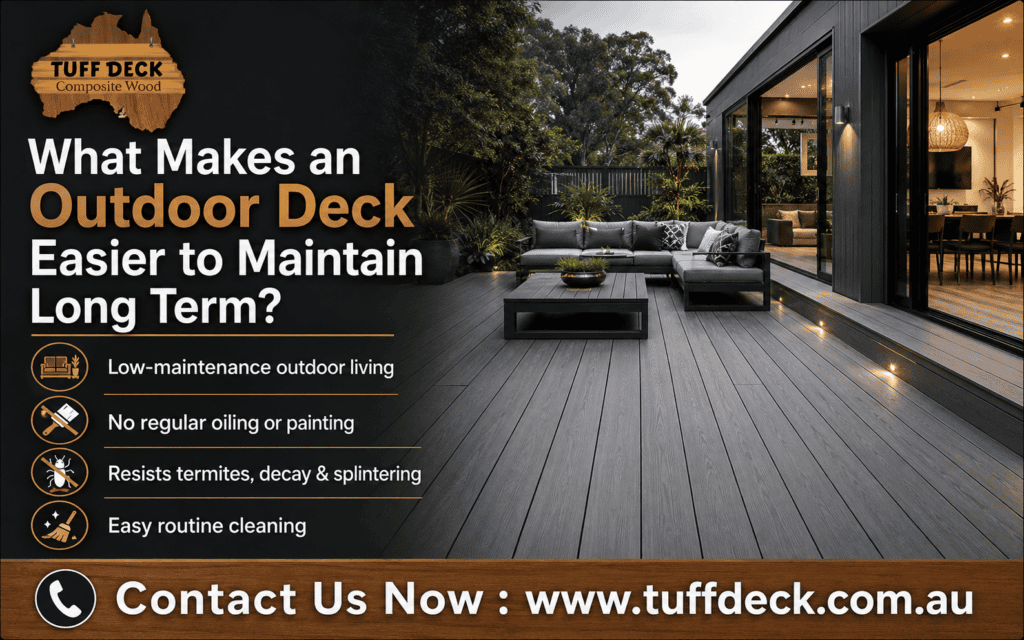
An outdoor deck should give you more time to enjoy your backyard, not create another weekend maintenance job. While every deck needs basic care, the amount of cleaning, repair and refinishing required over its lifetime depends heavily on the material, design, installation quality and surrounding environment. For Melbourne homeowners looking for a practical alternative to traditional timber, Grey Composite Decking can provide a contemporary appearance while reducing many of the ongoing maintenance tasks associated with natural wood.
The easiest decks to maintain are generally those planned with long-term performance in mind from the beginning. Choosing the right boards is important, but drainage, ventilation, fixings, layout and everyday use can all influence how much attention the deck will need in the years ahead.
Why Does Decking Material Make Such a Big Difference?
The material forms the surface you walk on every day and is constantly exposed to sunlight, rain, dirt, leaves, furniture and changing temperatures.
Traditional timber can create a beautiful outdoor area, but maintaining its appearance may involve sanding, oiling, staining or sealing at different stages of its life. Boards can also be affected by splintering, rot, insects or movement if maintenance is neglected.
Composite decking is designed differently. It combines wood-based material with polymer components to create boards intended for outdoor use. Rather than relying on regular coatings to maintain the surface, a quality composite system is designed to provide a more consistent, low-maintenance finish.
This does not mean composite decking is maintenance-free. Outdoor surfaces still collect dust, pollen, food spills and organic matter. The advantage is that routine maintenance can generally focus more on cleaning rather than repeated sanding and refinishing.
What Features Make a Deck Easier to Maintain?
When comparing decking options, look beyond color and initial price. Several practical features can make a noticeable difference over the life of the deck.
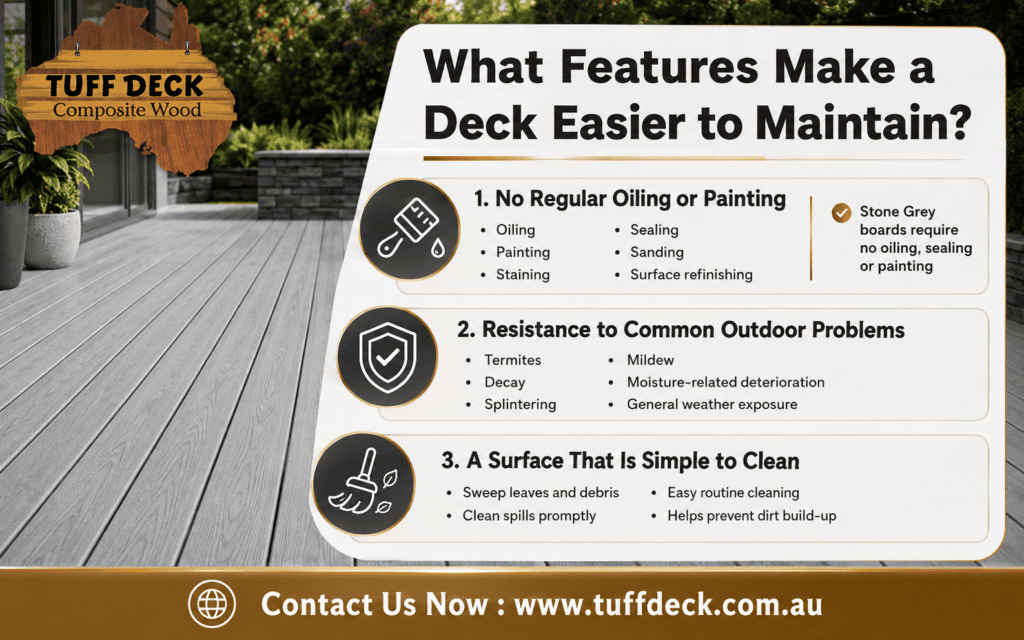
1. No Regular Oiling or Painting
One of the biggest maintenance considerations with an outdoor deck is surface treatment.
A low-maintenance decking system should reduce the need for regular:
- Oiling
- Painting
- Staining
- Sealing
- Sanding
- Surface refinishing
Reducing these recurring jobs can save both time and ongoing maintenance costs.
Tuff Deck’s Stone Grey boards are promoted as requiring no oiling, sealing or painting and are manufactured using reclaimed timber and recycled plastic.
2. Resistance to Common Outdoor Problems
Outdoor decking has to handle more than foot traffic. Moisture, insects and changing weather conditions can gradually affect some materials.
Choosing boards designed to resist common outdoor issues can reduce the likelihood of repairs later.
Useful characteristics to look for include resistance to:
- Termites
- Decay
- Splintering
- Mildew
- Moisture-related deterioration
- General weather exposure
These features become especially valuable when the deck surrounds a pool, sits near landscaping or receives frequent exposure to rain.
3. A Surface That Is Simple to Clean
A practical deck should not require specialist maintenance every time it becomes dirty.
For normal household use, routine care usually means removing loose debris and cleaning the surface when required. Sweeping leaves before they accumulate can also prevent damp organic material from sitting on the boards for extended periods.
Spills should be cleaned reasonably quickly, particularly around outdoor dining and barbecue areas.
The goal is not to constantly clean the deck. Instead, a sensible cleaning routine prevents dirt from becoming harder to remove later.
Good Drainage Can Reduce Future Maintenance
Even high-quality decking can become more difficult to maintain if water cannot drain away properly.
Water should not remain trapped beneath or around the deck for long periods. The substructure and surrounding area need to allow moisture to escape.
Plan for Water Before Installation
Before the boards are installed, consider:
- Where rainwater naturally flows
- Whether the ground needs drainage
- How water will move away from the house
- Whether nearby garden beds could direct moisture towards the deck
- How much airflow will be available below the boards
These details may seem less exciting than choosing a color, but they can have a major influence on long-term performance.
Ventilation Under the Deck Matters Too
A deck needs more than surface drainage. Air circulation underneath the structure can also help moisture disperse.
Low-clearance decks require particularly careful planning because there may be less natural airflow underneath them.
A properly planned substructure should account for the site conditions rather than simply copying the same construction method used on every project.
This is one reason it helps to speak with experienced local professionals when researching eco decking Melbourne. Local suppliers and installers are familiar with the types of outdoor spaces, weather exposure and design requirements commonly found around Melbourne homes.
Does Color Affect How Easy a Deck Is to Live With?
Color may not change the cleaning process itself, but it can influence how the deck looks between cleans.
Very light surfaces can make some marks more noticeable, while extremely dark boards may show dust, pollen or certain debris more clearly. Mid-range neutral colors can provide a practical balance.
Grey is popular because it can work with a wide range of contemporary exterior finishes.
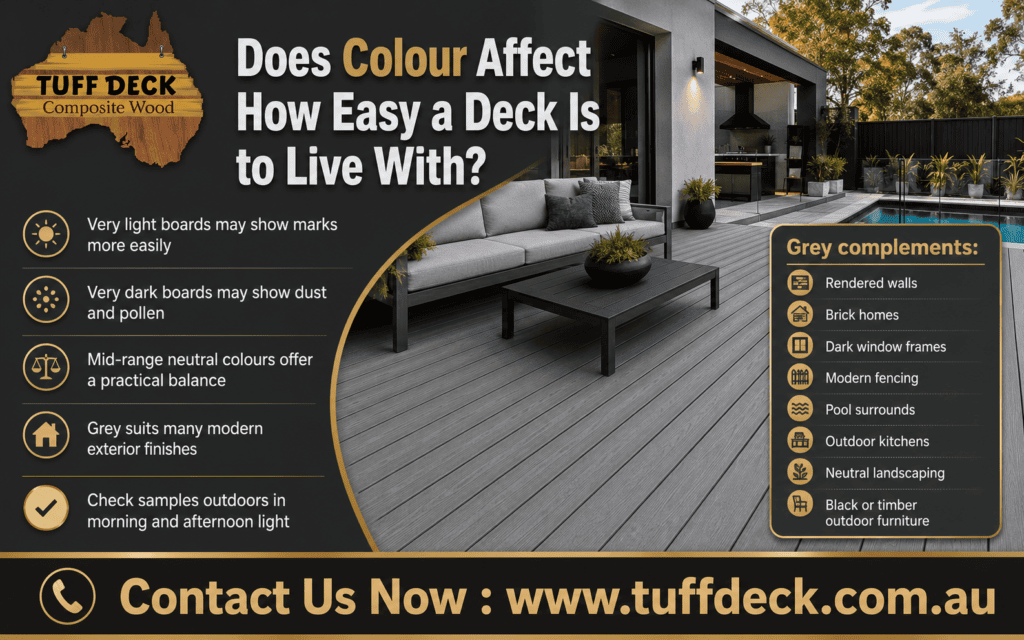
It may complement:
- Rendered walls
- Brick homes
- Dark window frames
- Modern fencing
- Pool surrounds
- Outdoor kitchens
- Neutral landscaping
- Black or timber outdoor furniture
When choosing a color, inspect actual samples outdoors rather than relying entirely on a screen. Morning sun, afternoon light and surrounding building materials can noticeably change how a board appears.
How Does Installation Affect Future Maintenance?
Even a low-maintenance product can perform poorly when installed incorrectly.
Correct installation helps boards move, drain and perform as intended. The installation system should follow the manufacturer’s requirements for spacing, support and fixings.
Board Spacing
Appropriate gaps between boards allow drainage and accommodate the requirements of the decking system.
Poor spacing can allow dirt to collect or interfere with water movement.
Correct Fixings
Using the specified clips, screws, starter fasteners and related components helps create a consistent installation.
Mixing incompatible accessories simply to reduce the initial cost may create unnecessary problems later.
A Stable Substructure
The boards are only one part of the deck.
A strong, correctly spaced and properly constructed supporting frame helps keep the finished surface stable. Substructure design should suit the board system, deck height, site and intended use.
Keep Leaves and Garden Debris Under Control
Trees can provide welcome shade over a deck, but they also drop leaves, flowers, seed pods and other organic material.
Allowing damp debris to remain in corners or between boards for long periods can make cleaning more difficult.
A simple routine can make a difference:
- Sweep the surface when leaves begin accumulating.
- Keep drainage gaps clear.
- Trim plants that constantly drop material onto the deck.
- Avoid allowing soil or mulch to build up against the deck edge.
- Clean spills before they have time to sit on the surface.
Regular light maintenance is usually easier than occasional heavy cleaning.
Think Carefully About Outdoor Furniture
Furniture can also affect deck maintenance.
Heavy pots and large outdoor settings can make parts of the deck difficult to access. Dirt may accumulate underneath items that stay in exactly the same position for years.
Where practical, periodically move furniture and clean underneath it.
Protective feet or suitable furniture pads can also help reduce unnecessary surface marking. Take extra care when dragging heavy items across any finished decking surface.
What About Decking Around Pools?
Pool decks have additional maintenance considerations because they regularly encounter water and bare-foot traffic.
Material selection should therefore consider both durability and surface performance.
Tuff Deck lists its Stone Grey Composite Decking as slip resistant with an Australian-tested P3/R10 rating. The company also describes the boards as resistant to termites, mildew, decay and splinters.
For any pool project, however, the complete design should be considered rather than selecting boards based on one feature alone. Drainage, board direction, pool equipment access and local requirements all need to be incorporated into the plan.
Is Low Maintenance the Same as No Maintenance?
No.
“Low maintenance” should not be interpreted as “never clean it again.”
Every outdoor area is exposed to environmental conditions. Even concrete, tiles and paving require cleaning.
A realistic low-maintenance deck should simply require fewer intensive recurring treatments.
For many homeowners, the ideal routine may involve:
- Sweeping when required
- Removing leaves and debris
- Washing the surface periodically
- Cleaning spills promptly
- Checking drainage areas
- Inspecting the deck occasionally for anything unusual
This is substantially different from planning recurring sanding, staining or oiling as part of the deck’s normal appearance maintenance.
How Should You Compare Decking Before Buying?
Do not judge decking purely by the advertised board price.
Ask what you are getting as a complete system.
Useful questions include:
What Is the Board Made From?
Understand whether the product is timber, composite or another material and how that construction affects maintenance.
What Maintenance Does the Manufacturer Recommend?
Ask specifically whether the boards require oiling, painting, sealing or other recurring treatments.
Are Fixings Included?
Find out whether the quoted price includes clips, screws, starter fasteners, trims and fascia where required.
Can You See Physical Samples?
Seeing and touching samples can help you compare color, texture and overall finish more accurately.
Is Installation Available?
If you do not plan to build the deck yourself, confirm whether professional installation is available and whether the installer is familiar with the specific product being supplied.
Why Choose a Tuff Deck?
Tuff Deck manufactures and supplies composite decking from Melbourne and also provides installation services for Melbourne and surrounding areas. Its product range includes decking, fencing, screening, cladding and decking fasteners, giving homeowners, builders and architects access to a broader outdoor building system from one supplier. The company states that its composite decking is manufactured locally in Melbourne, with custom options available for different project requirements.
Working with established decking suppliers Melbourne can also make the planning process easier because you can discuss board selection, color, sizing, accessories and installation requirements before committing to the project. For homeowners who want a modern outdoor area without taking on the ongoing maintenance typically associated with timber, choosing a complete composite decking system can provide a practical long-term solution.
Final Thoughts
What makes an outdoor deck easier to maintain long term is not one feature alone. Material choice, drainage, ventilation, professional installation, suitable fixings and simple routine cleaning all contribute to how the deck performs over time. Planning these details before construction can help create an outdoor space that looks good, suits Melbourne conditions and requires less time spent on repetitive maintenance leaving you more time to actually enjoy the area.