


 admin
admin

A swimming pool can transform an ordinary backyard into a space for relaxation, exercise and entertaining. However, choosing the right material for the surrounding area is just as important as selecting the pool itself. Poolside surfaces face frequent water exposure, changing temperatures, foot traffic and regular cleaning, making durability, comfort and safety essential considerations.
For homeowners exploring composite decking Melbourne options, composite boards can offer an attractive alternative to traditional timber. Their low-maintenance design and range of finishes make them worth considering for outdoor pool areas. But are composite boards suitable for every swimming pool? Understanding their advantages, limitations and installation requirements will help you make an informed decision.
Is Composite Decking a Good Choice Around Swimming Pools?
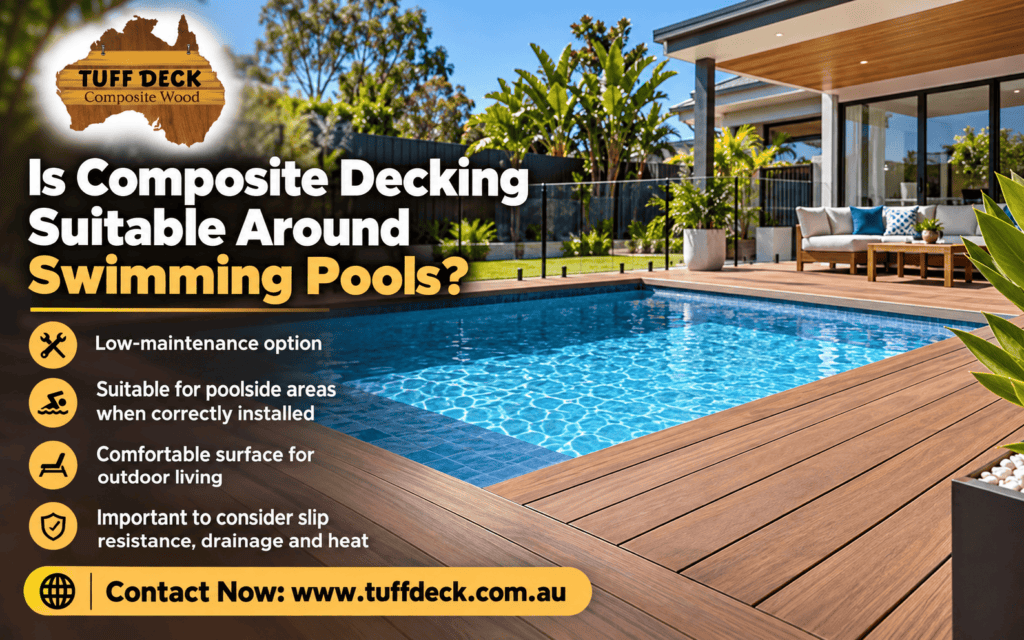
Yes, composite decking can be a suitable choice around swimming pools when the selected product has appropriate wet-surface performance, is compatible with the pool environment and is installed correctly.
Composite decking generally combines wood fibres and polymers to create boards designed for outdoor use. Unlike natural timber, these materials do not require routine oiling or staining to maintain their finish.
However, not every composite board is intended for wet environments. Before choosing composite decking around pool areas, homeowners should check the manufacturer’s specifications, slip-resistance test information and recommended installation methods.
The right combination of materials, drainage and ongoing care can help create an attractive, practical poolside area.
Why Consider Composite Decking for Pool Areas?
Pool surrounds should provide a comfortable surface while complementing the property’s outdoor design. Composite decking offers several potential advantages.
1. Reduced Maintenance Compared with Timber
Traditional timber decking may need periodic sanding, staining or oiling, depending on the timber species, coating system and environmental exposure.
Composite decking eliminates some of these routine finishing requirements.
For busy homeowners, this means more time enjoying the pool and less time maintaining the surrounding deck.
Regular cleaning is still necessary, especially in areas exposed to sunscreen, pool chemicals, leaves and standing water.
2. Resistance to Everyday Moisture Exposure
Water frequently splashes onto decking around swimming pools.
Many composite boards are designed to resist common moisture-related problems associated with untreated or poorly maintained timber.
Nevertheless, composite decking is not automatically waterproof in every application. Correct drainage, ventilation and suitable structural materials remain important.
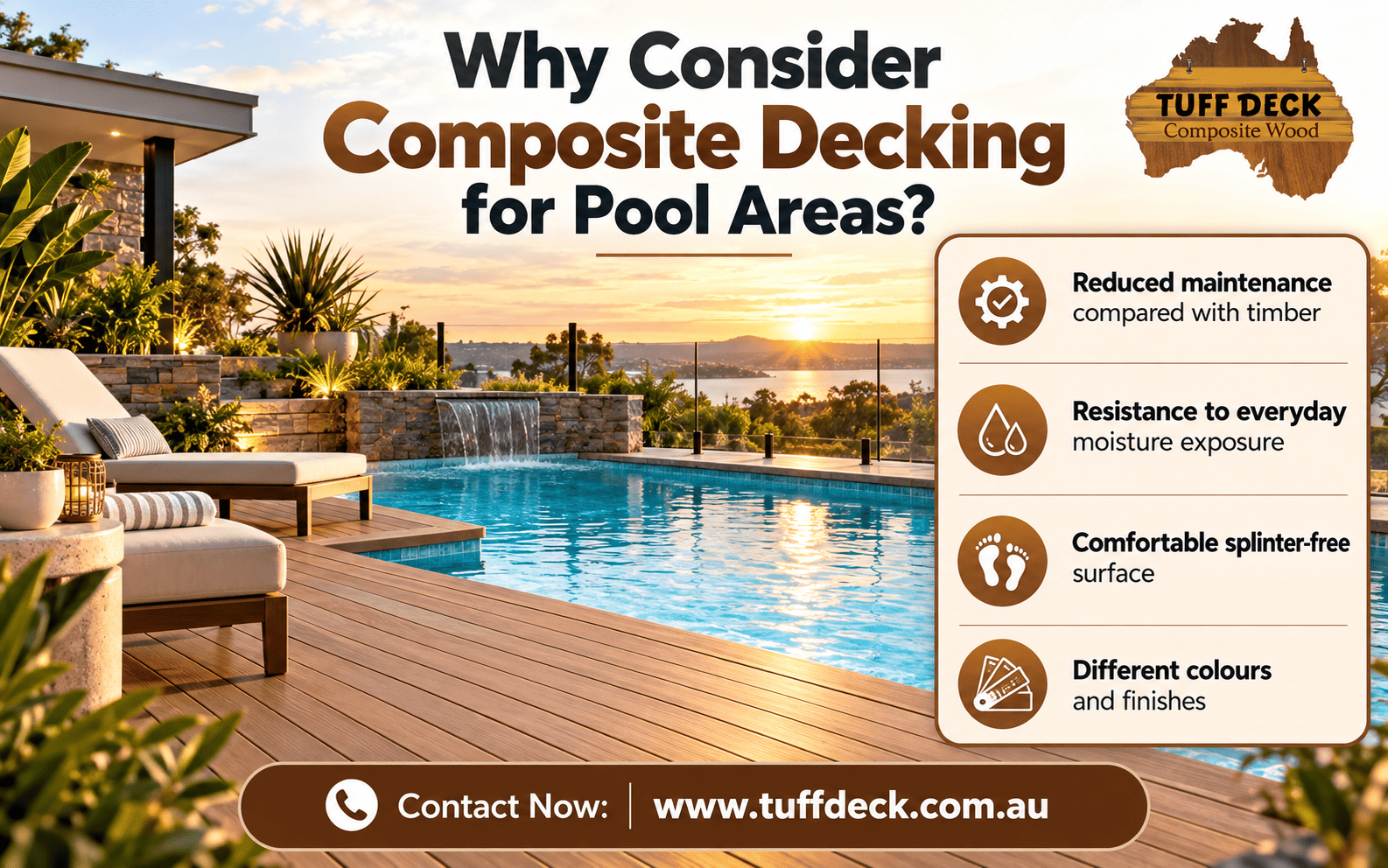
3. A Comfortable, Splinter-Free Surface
Barefoot comfort is particularly important around swimming pools.
Composite boards generally avoid the timber splinters that may develop as traditional wooden boards weather or deteriorate.
However, homeowners should still inspect the surface for damage, exposed fixings or sharp edges.
4. Different Colors and Finishes
Composite decking is available in a variety of colors and surface designs.
Popular poolside choices include:
- Stone Grey: Creates a contemporary appearance around modern swimming pools.
- Smoke White: Offers a lighter finish that can complement bright outdoor spaces.
- Copper Brown: Provides a warmer, timber-inspired appearance.
- Aussie Teak: Suits homeowners who prefer natural-looking timber tones.
Colour selection should consider the home’s exterior, landscaping, sunlight exposure and the overall design of the swimming pool.
Is Composite Decking Slippery When Wet?
Slip resistance is one of the most important factors when selecting poolside decking.
Any outdoor walking surface can become slippery under certain conditions, especially when wet or contaminated with algae, sunscreen or other substances.
Some composite decking products are tested for slip resistance under Australian standards. For example, Tuff Deck lists a P3/R10 slip-resistance classification for selected decking products. Homeowners should request the applicable test documentation and confirm whether the tested product is appropriate for their specific poolside location.
Factors That Affect Poolside Slip Resistance
Several considerations influence how a decking surface performs:
- Surface texture and finish
- Wet-surface slip-resistance classification
- Accumulation of algae, dirt or sunscreen
- Drainage and standing water
- Regular cleaning and maintenance
- Deck slope and surrounding design
It is important to understand that a slip-resistant classification does not make a surface completely slip-proof.
For residential pool surrounds, confirm the applicable requirements with a qualified designer, builder or building professional before installation.
Does Composite Decking Get Hot Around Swimming Pools?
Composite decking can become hot when exposed to direct sunlight, particularly during Melbourne’s warmer summer days.
Like timber, concrete and other outdoor materials, composite boards absorb solar energy. Surface temperatures vary depending on board colour, composition, finish and weather conditions.
How Can Homeowners Improve Poolside Comfort?
A few practical design decisions can help:
- Consider lighter decking colours for areas receiving prolonged sunlight.
- Use shade sails, pergolas or suitable landscaping to reduce direct exposure.
- Compare physical decking samples under similar sunlight conditions.
- Avoid assuming a board will remain comfortable for bare feet simply because it has a lighter colour.
- Plan shaded walking areas between the house, seating and pool.
A lighter board may remain cooler than a darker alternative under comparable conditions, but actual performance depends on the individual product.
Testing samples before purchasing is a useful way to evaluate appearance and comfort.
Why Is Proper Drainage Important for Pool Decking?
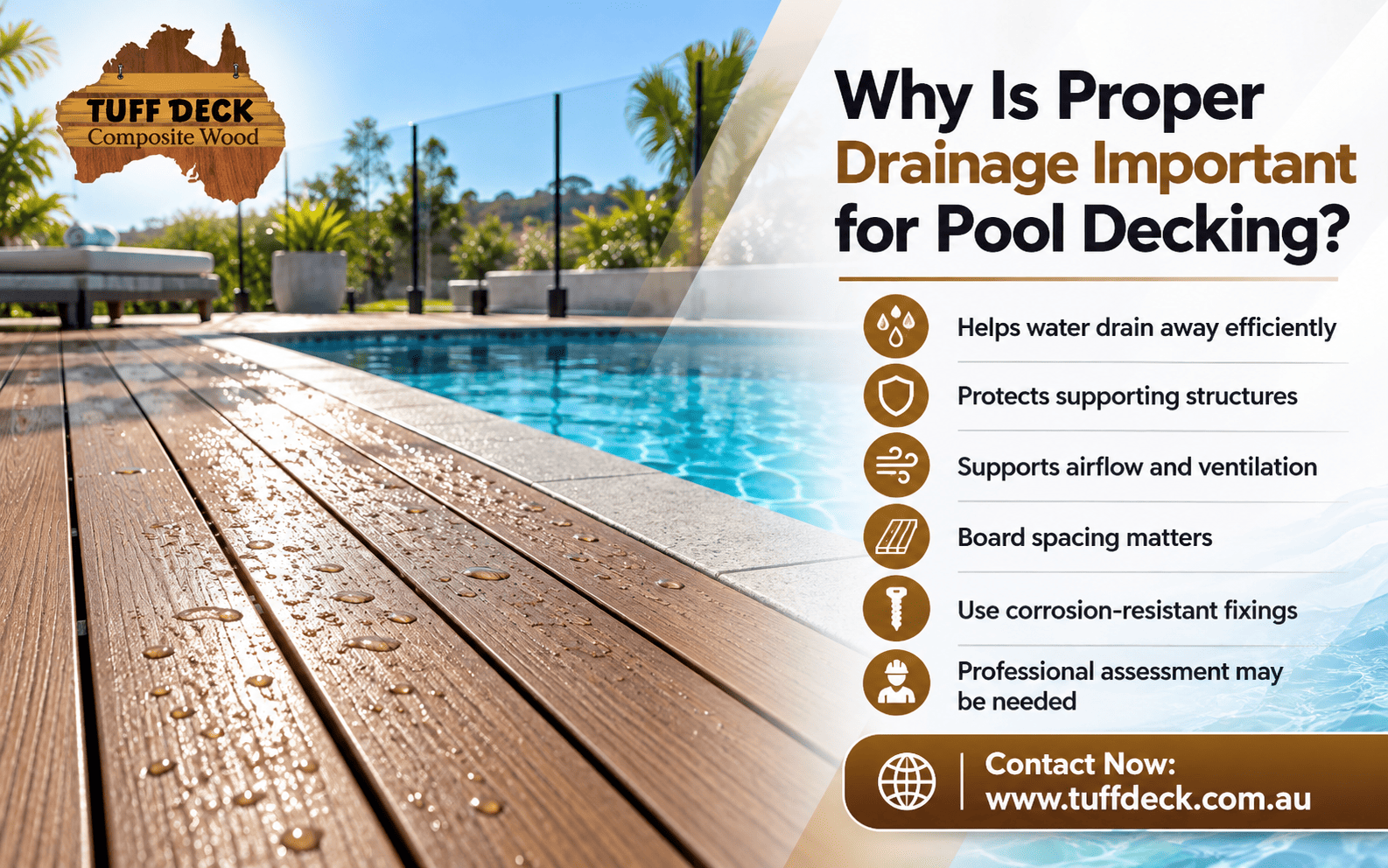
Drainage plays an essential role in the performance of any outdoor deck, especially around swimming pools.
Water that remains trapped beneath the boards can contribute to problems with supporting structures, moisture accumulation and surrounding surfaces.
A properly designed poolside deck should allow water to drain away without collecting around structural components.
Important Installation Considerations
Before starting construction, consider the following:
- Subframe materials: Choose structural materials suitable for outdoor exposure and the expected poolside conditions.
- Board spacing: Follow the manufacturer’s recommended gaps to allow drainage and thermal movement.
- Ventilation: Maintain the required airflow beneath the decking.
- Surface preparation: Assess the supporting ground or concrete for drainage and structural suitability.
- Fixings: Select compatible corrosion-resistant fixings appropriate for the environment.
- Pool access: Ensure the finished deck does not interfere with required pool barriers, gates or drainage systems.
Homeowners planning a new project can refer to Tuff Deck’s composite decking installation guide for general information about installation preparation and board placement.
Poolside construction may require additional professional assessment because of moisture exposure, structural requirements and pool safety regulations.
Composite Decking vs Timber Decking Around Pools
Both composite decking and natural timber can create attractive swimming pool surrounds. However, their maintenance requirements and long-term performance characteristics differ.
| Feature | Composite Decking | Timber Decking |
| Routine maintenance | Usually does not require regular oiling or staining | May need periodic refinishing |
| Moisture exposure | Product-dependent resistance to moisture | Depends on timber species, treatment and maintenance |
| Splintering | Generally resistant to timber-type splintering | Splinters may develop over time |
| Appearance | Manufactured colours and finishes | Natural timber grain |
| Surface temperature | Can become hot in direct sunlight | Can also become hot |
| Slip resistance | Depends on product and condition | Depends on timber finish and condition |
| Upfront cost | Varies by board type and installation | Varies by timber species and installation |
Neither material is automatically the best choice for every property.
The decision should consider the initial budget, maintenance expectations, desired appearance and relevant product specifications.
For homeowners who want a timber-inspired appearance without regular refinishing, composite decking may be a practical alternative.
How to Maintain Composite Decking Around Swimming Pools
Although composite decking is generally considered low-maintenance, poolside environments still require regular attention.
Pool water, sunscreen, food spills, leaves and environmental dirt can accumulate on the surface.
Simple Maintenance Tips
Remove debris regularly. Sweep away leaves, dust and dirt to prevent unnecessary buildup.
Clean with suitable products. Use a soft brush, water and a cleaning solution approved by the decking manufacturer.
Address spills promptly. Remove sunscreen, grease and other residues before they become difficult to clean.
Monitor water drainage. Check whether water is collecting in particular areas or beneath the deck.
Inspect boards and fixings. Look for movement, damage, loose components or changes in surface condition.
Avoid unsuitable chemicals. Harsh cleaners, concentrated chemicals and inappropriate pressure-washing methods may damage certain composite finishes.
If the pool uses chlorine or saltwater, check whether the manufacturer provides specific instructions for chemical exposure and cleaning.
Good maintenance supports both the appearance and safe everyday use of the decking.
What Should You Check Before Choosing Composite Decking for Your Pool?
Not all composite decking products offer identical performance.
Before purchasing, ask the supplier a few practical questions:
- Is this specific decking product recommended for residential pool surrounds?
- What wet-surface slip-resistance test results are available?
- Are there restrictions involving chlorine or saltwater exposure?
- What board colours and finishes are available?
- What spacing, drainage and ventilation requirements apply?
- What does the product warranty cover?
- Can the supplier provide samples or examples of suitable installations?
These questions help homeowners evaluate product suitability rather than choosing boards based only on appearance or price.
It is also worth obtaining a detailed quote that accounts for the boards, supporting structure, fixings, installation and any site-specific requirements.
About Tuff Deck
Tuff Deck is a Melbourne-based manufacturer, supplier and installer of wood-plastic composite decking products. Based in Dandenong South, Victoria, the company supplies Australian-made composite decking boards for residential and commercial outdoor projects. Its product range includes different colours, finishes and custom sizing options to suit a variety of design requirements. Tuff Deck also provides decking installation services, helping customers plan practical outdoor spaces that complement their properties.
Why Choose Tuff Deck for Your Outdoor Decking Project?
Choosing a decking supplier involves more than finding a suitable colour. Homeowners also need reliable product information, appropriate materials and clear installation guidance.
Tuff Deck offers several advantages worth considering:
- Locally manufactured products: Composite decking boards manufactured in Melbourne.
- Multiple colour choices: Options for modern, traditional and timber-inspired outdoor designs.
- Custom sizing options: Board sizes can be tailored to relevant project requirements.
- Manufacturing and installation services: Access to both product supply and installation support.
- Low-maintenance materials: Composite boards designed to reduce the need for routine timber-style refinishing.
- Product guidance: Assistance with choosing board specifications and planning outdoor projects.
For poolside applications, customers should discuss their particular site conditions and confirm the suitability of the selected boards before proceeding.
Frequently Asked Questions About Composite Pool Decking
Can Composite Decking Be Used Around Saltwater Pools?
Some composite decking products may be suitable for saltwater pool environments. However, salt deposits and exposure to pool chemicals can affect materials and fixings. Always confirm product compatibility and maintenance requirements with the manufacturer.
Is Composite Decking Waterproof?
Composite decking is generally designed to tolerate outdoor moisture exposure, but that does not mean every board or decking system is completely waterproof. Proper drainage and ventilation are still necessary.
Does Composite Decking Need Sealing Around a Pool?
Most conventional composite decking boards do not require routine sealing like natural timber. However, maintenance requirements vary by product, so follow the manufacturer’s instructions.
Which Composite Decking Colour Is Best Around a Swimming Pool?
Lighter grey and white finishes are popular choices for contemporary pool designs. They may also offer temperature advantages over some darker colours, although actual surface temperature depends on the product and conditions.
How Long Does Composite Decking Last Around a Pool?
The service life depends on manufacturing quality, environmental conditions, correct installation and ongoing maintenance. Review the specific manufacturer’s warranty and technical documentation rather than assuming every composite board has the same lifespan.
Choose the Right Composite Decking Boards for Your Poolside Space
A well-planned poolside deck should combine appearance, everyday comfort and practical maintenance. Before selecting materials, consider wet-surface slip resistance, drainage, direct sunlight, exposure to pool water and installation requirements.
For homeowners considering a new outdoor project, Tuff Deck offers a range of composite decking boards in different colours and finishes. Discussing your pool layout, preferred design and site conditions with the team can help determine which options may suit your project.
Final Thoughts
Composite decking can be a suitable choice around swimming pools, provided the selected boards meet the needs of the environment and are installed correctly. Its low-maintenance characteristics, range of finishes and resistance to common timber-related issues make it worth considering for Melbourne outdoor spaces.
The most important step is choosing a product based on verified performance and the conditions of your property, rather than appearance alone. With careful planning, suitable materials and regular upkeep, a composite pool deck can become an attractive and functional part of your outdoor living area.